Global Molecule Portfolio Optimization
PHARMACEUTICAL
/
B2B / STRATEGY / SYSTEM DESIGN
CONTEXT
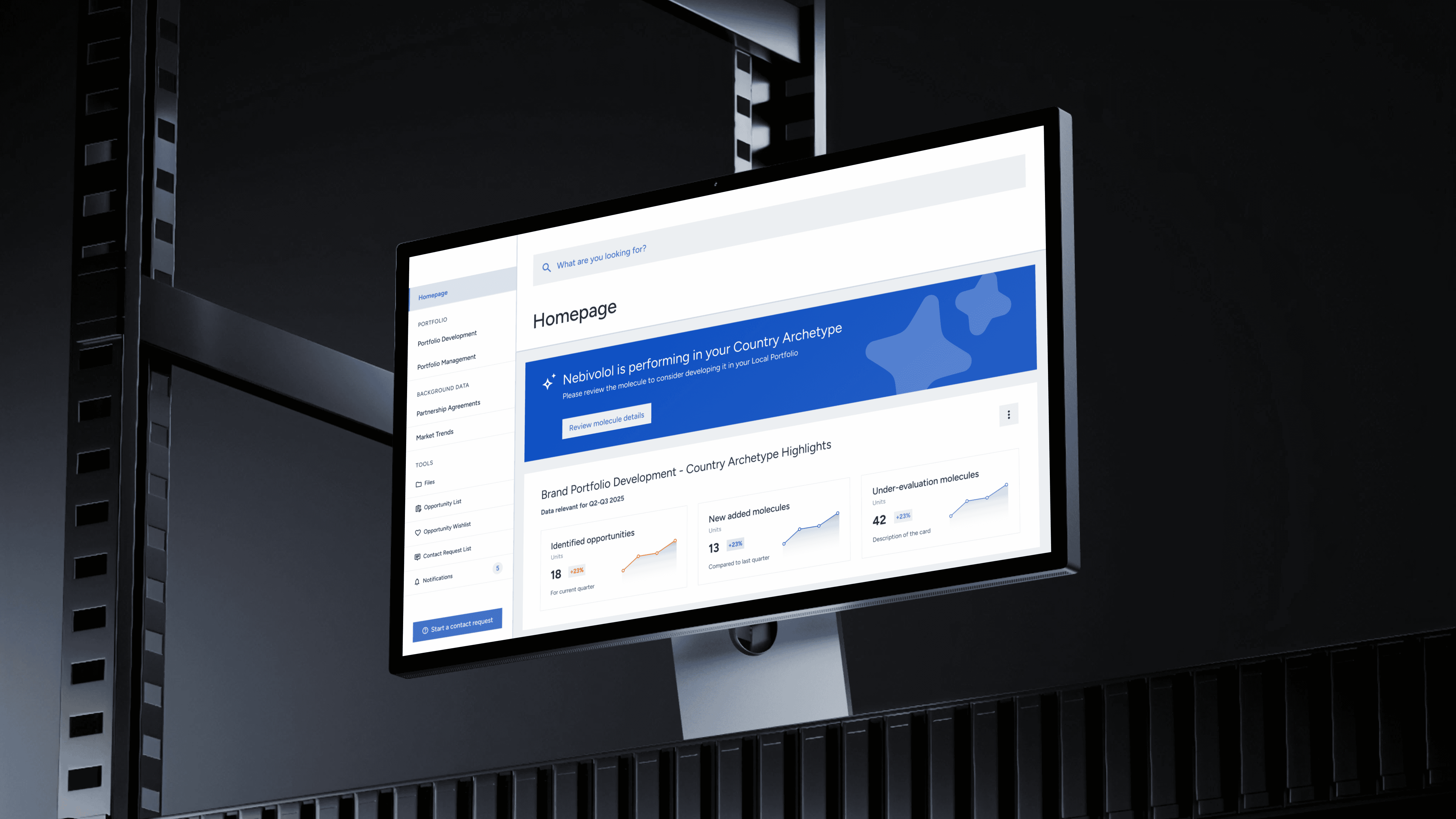
A pharma company needed to evolve an existing internal platform into a Portfolio Optimization Platform capable of supporting global and local teams in portfolio planning, development and expansion decisions.
The goal was to move from fragmented, static documentation toward a centralized decision-support system capable of reconciling global governance with local operational autonomy.
MY ROLE
I was the sole UX/UI Designer on the project, working across:
problem framing and system definition
stakeholder alignment and synthesis
UX, information architecture and concept design
I collaborated closely with Power BI technical experts and C-Level business stakeholders.
CHALLENGE
Portfolio decisions relied on documents, disconnected tools and siloed data sources.
Critical information was scattered across PDFs, spreadsheets, and legacy platforms, making it difficult to:
Access reliable, up-to-date information
Compare opportunities across markets
Understand ownership, dependencies, and lifecycle stages
Align global standards with local market realities
The core challenge was not interface redesign, but redefining the underlying decision architecture across multiple roles, regions and governance levels.
Goals
1 Enable informed, data-driven portfolio decisions
2 Align global governance with local execution needs
3 Structure information to support multi-role access
4 Increase adoption through clarity and relevance
5 Design a scalable foundation for future data integration and AI capabilities
Constraints
1 Highly complex pharmaceutical domain
2 Regulatory and governance requirements
3 Decentralized decision-making across markets
4 Legacy data formats and reporting logic
APPROACH
I approached the project from a systems and governance perspective, focusing on how decisions were structured rather than how data was displayed.
The work combined:
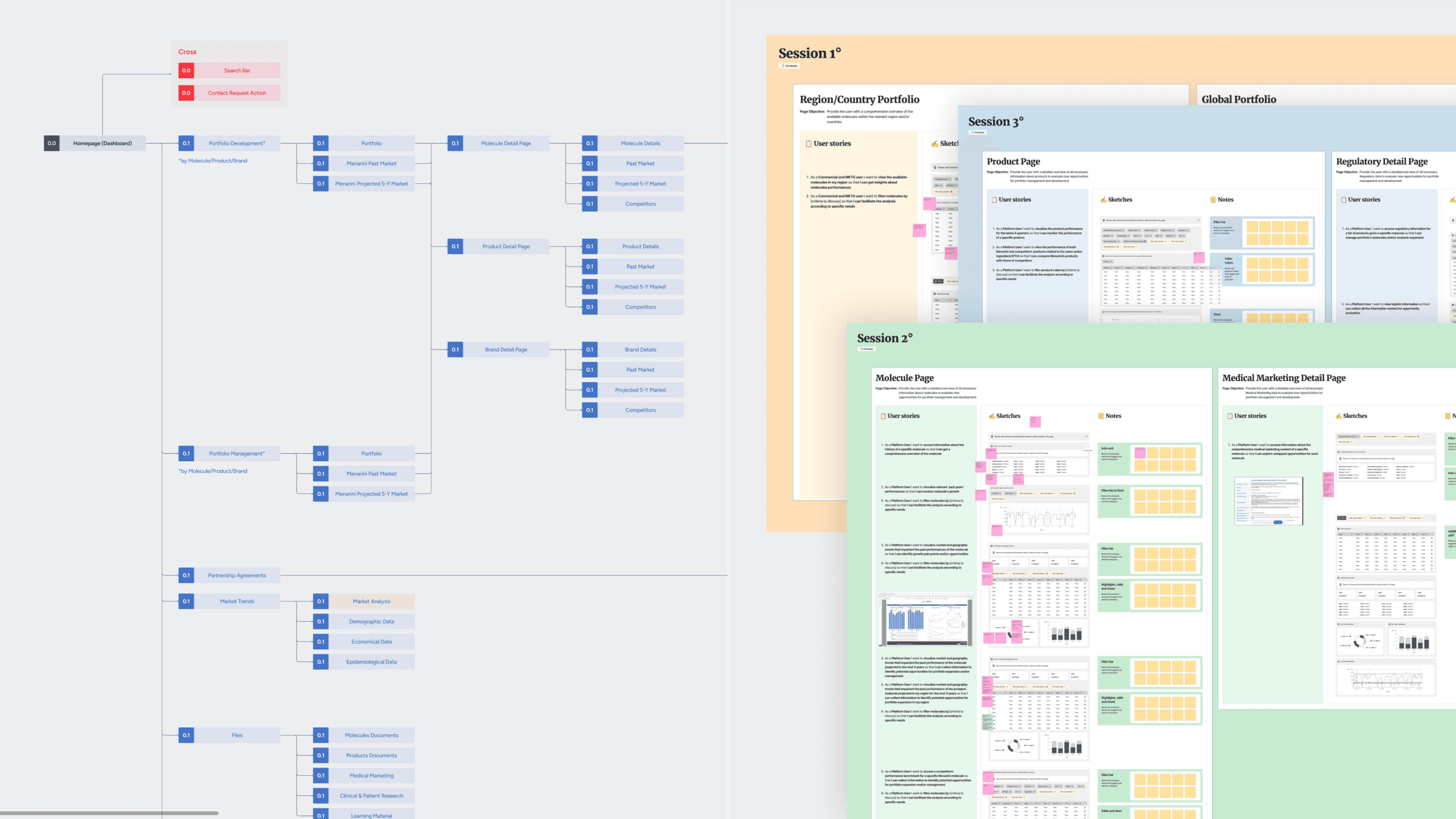
Stakeholder interviews across business, regulatory, IT and clinical roles
Mapping of existing decision flows and data dependencies
Tracking of organizational flows between global and local units
Definition of a shared decision framework and experience vision
Rather than optimizing screens, the focus was on designing a scalable structure and decision framework that could mediate complexity across roles and markets.
KEY PILLARS
1
Decision architecture over data presentation
The platform was structured around key portfolio decisions and lifecycle stages, rather than around datasets or document repositories.
2
Layered access across governance levels
Information visibility and interaction depth were aligned with responsibility scope, enabling global oversight while preserving local operational detail.
3
Interactive data over static reporting
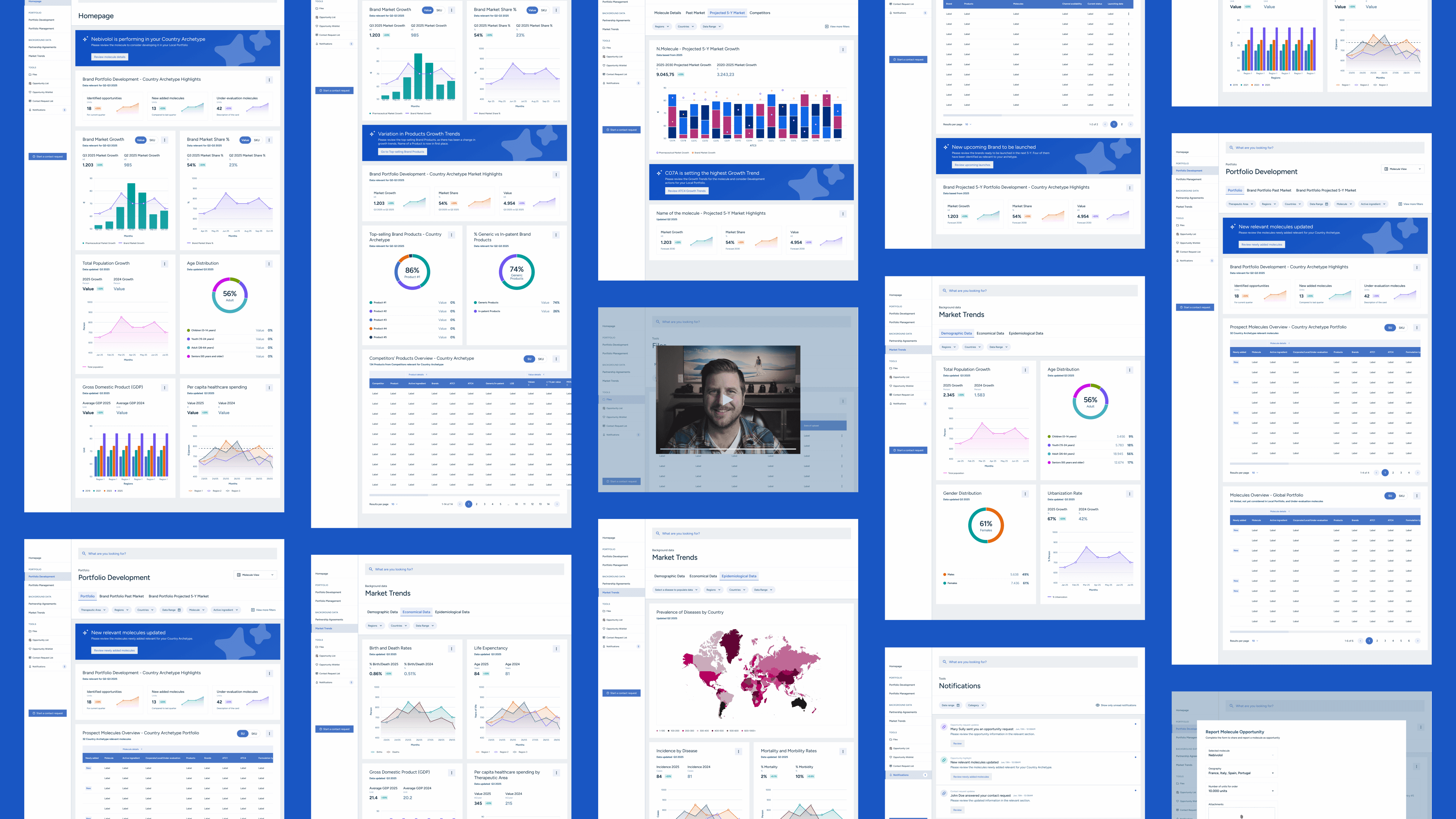
Previously static reports were reconceived as dynamic, comparable, and filterable datasets to support cross-market analysis.
4
Scalability and AI-readiness by structure
The information architecture was designed to support future predictive models and recommendation systems without structural rework.
OUTCOME & IMPACT
The project delivered:
A clear value proposition aligned with business strategy
A shared decision framework bridging global and local needs
A scalable information architecture and conceptual product vision
Prioritized use cases and a structured product roadmap
The outcome provided a strategic reference model for evolving portfolio governance and data-driven decision-making across markets.
LEARNINGS
1
Governance is a design problem
In decentralized organizations, decision alignment depends on how information and responsibility are structured.
2
Data does not create clarity, structure does
Scalability emerges from coherent architecture, not from increasing data availability.
3
AI-readiness begins with decision logic
Predictive capabilities require clearly defined decision frameworks before automation adds value.
Global Molecule Portfolio Optimization
PHARMACEUTICAL
/
B2B / STRATEGY / SYSTEM DESIGN
CONTEXT
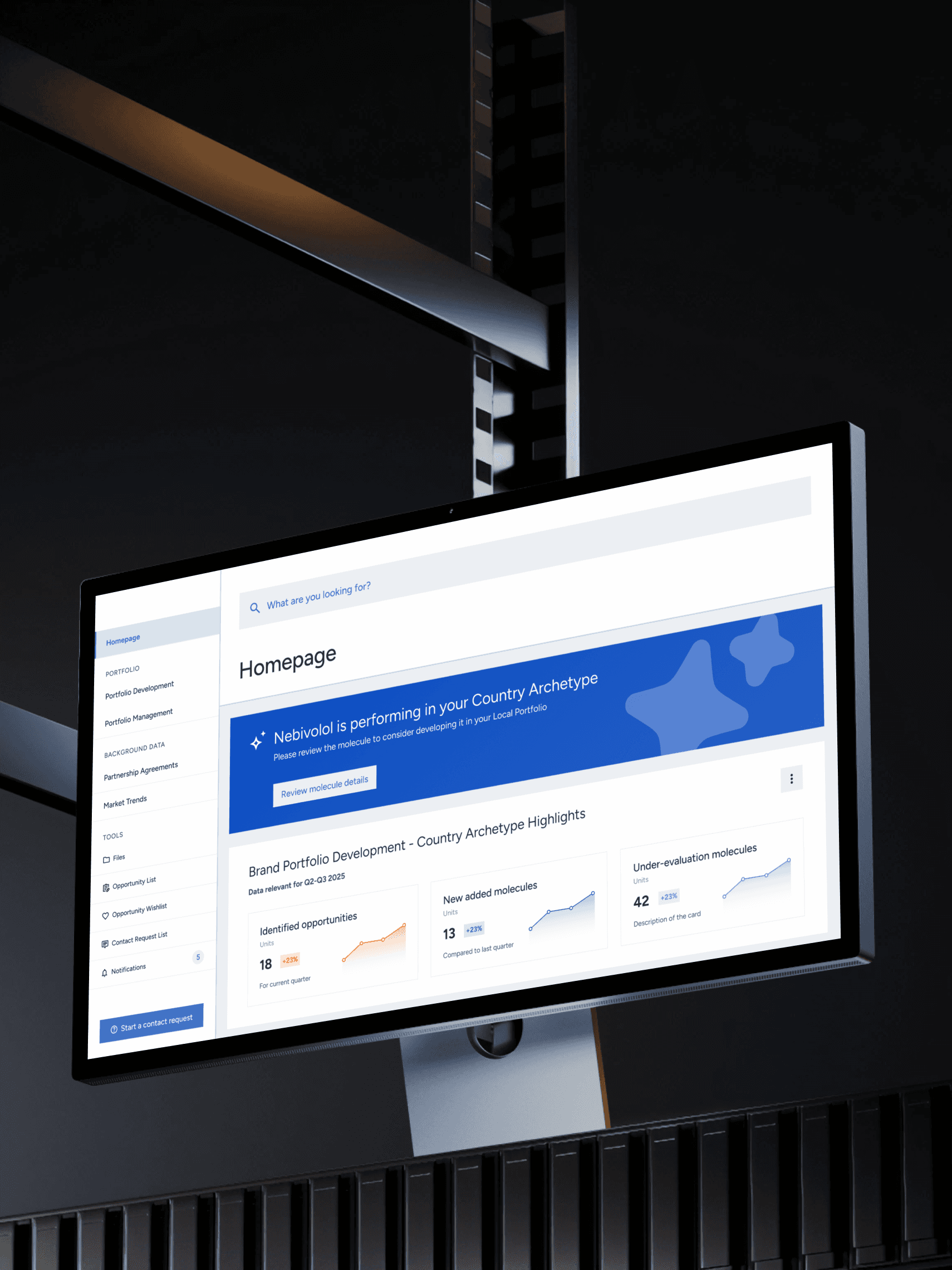
A pharma company needed to evolve an existing internal platform into a Portfolio Optimization Platform capable of supporting global and local teams in portfolio planning, development and expansion decisions.
The goal was to move from fragmented, static documentation toward a centralized decision-support system capable of reconciling global governance with local operational autonomy.
MY ROLE
I was the sole UX/UI Designer on the project, working across:
problem framing and system definition
stakeholder alignment and synthesis
UX, information architecture and concept design
I collaborated closely with Power BI technical experts and C-Level business stakeholders.
CHALLENGE
Portfolio decisions relied on documents, disconnected tools and siloed data sources.
Critical information was scattered across PDFs, spreadsheets, and legacy platforms, making it difficult to:
Access reliable, up-to-date information
Compare opportunities across markets
Understand ownership, dependencies, and lifecycle stages
Align global standards with local market realities
The core challenge was not interface redesign, but redefining the underlying decision architecture across multiple roles, regions and governance levels.
Goals
1 Enable informed, data-driven portfolio decisions
2 Align global governance with local execution needs
3 Structure information to support multi-role access
4 Increase adoption through clarity and relevance
5 Design a scalable foundation for future data integration and AI capabilities
Constraints
1 Highly complex pharmaceutical domain
2 Regulatory and governance requirements
3 Decentralized decision-making across markets
4 Legacy data formats and reporting logic
APPROACH
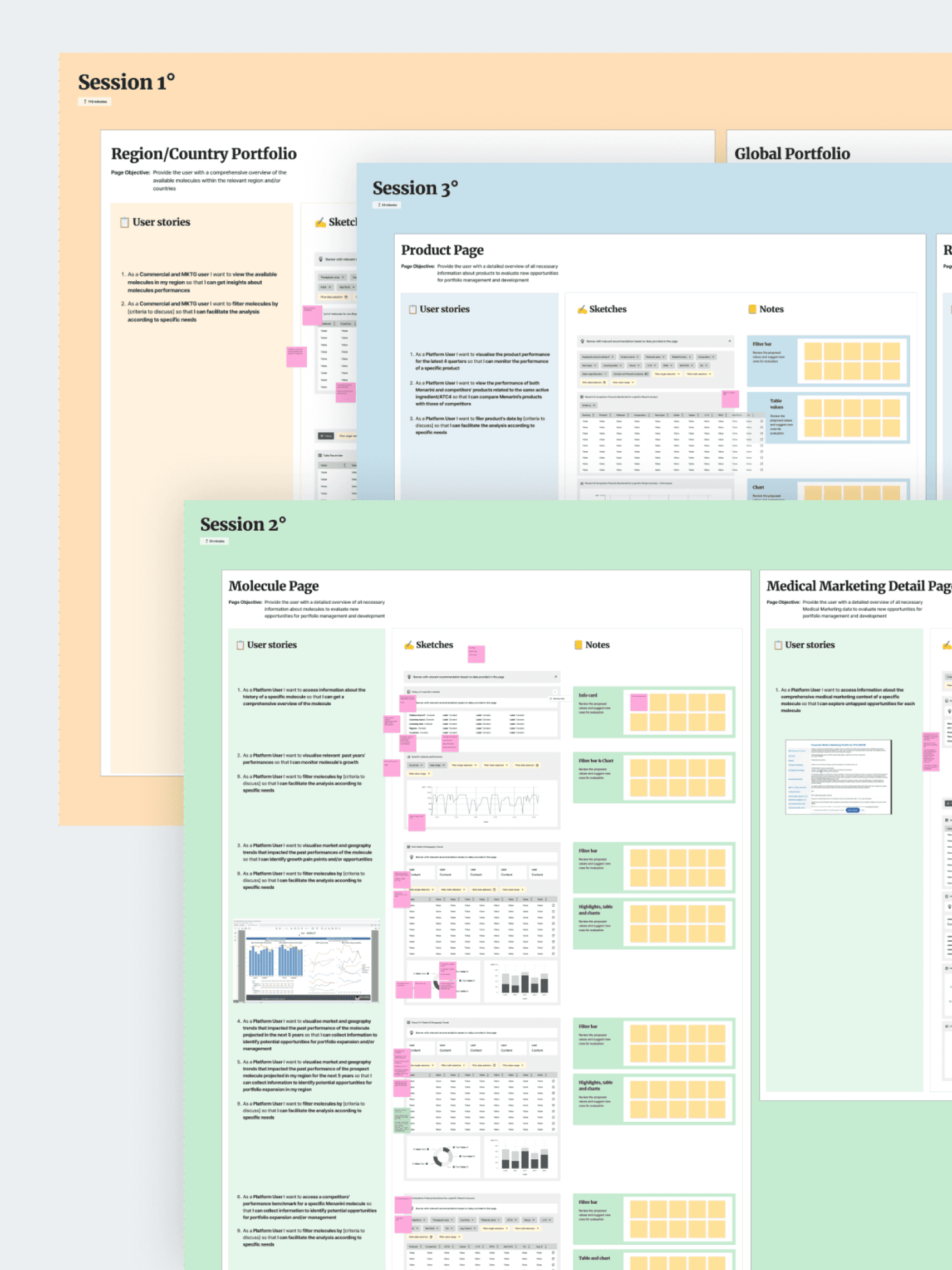
I approached the project from a systems and governance perspective, focusing on how decisions were structured rather than how data was displayed.
The work combined:
Stakeholder interviews across business, regulatory, IT and clinical roles
Mapping of existing decision flows and data dependencies
Tracking of organizational flows between global and local units
Definition of a shared decision framework and experience vision
Rather than optimizing screens, the focus was on designing a scalable structure and decision framework that could mediate complexity across roles and markets.
KEY PILLARS
1
Decision architecture over data presentation
The platform was structured around key portfolio decisions and lifecycle stages, rather than around datasets or document repositories.
2
Layered access across governance levels
Information visibility and interaction depth were aligned with responsibility scope, enabling global oversight while preserving local operational detail.
3
Interactive data over static reporting
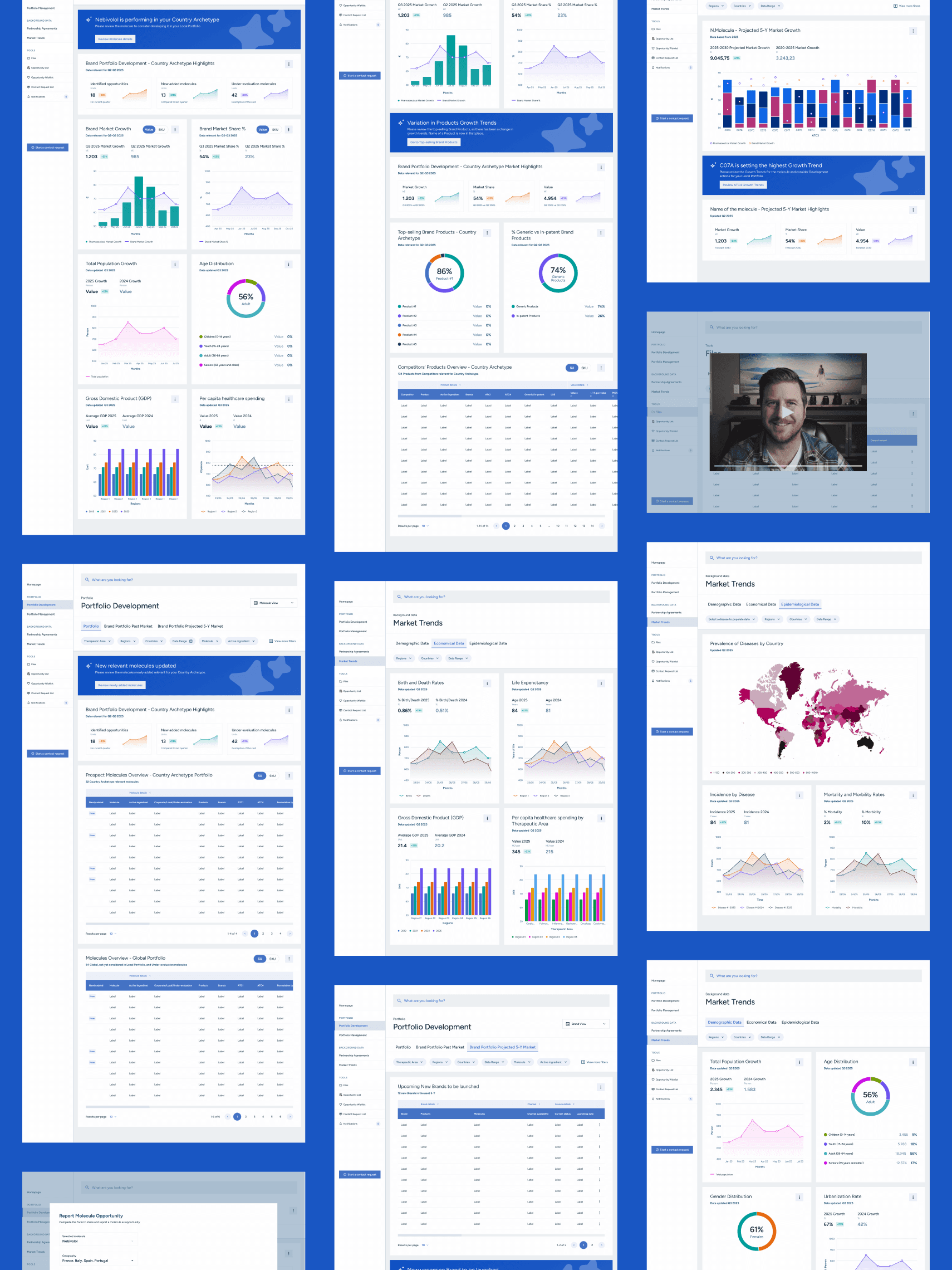
Previously static reports were reconceived as dynamic, comparable, and filterable datasets to support cross-market analysis.
4
Scalability and AI-readiness by structure
The information architecture was designed to support future predictive models and recommendation systems without structural rework.
OUTCOME & IMPACT
The project delivered:
A clear value proposition aligned with business strategy
A shared decision framework bridging global and local needs
A scalable information architecture and conceptual product vision
Prioritized use cases and a structured product roadmap
The outcome provided a strategic reference model for evolving portfolio governance and data-driven decision-making across markets.
LEARNINGS
1
Governance is a design problem
In decentralized organizations, decision alignment depends on how information and responsibility are structured.
2
Data does not create clarity, structure does
Scalability emerges from coherent architecture, not from increasing data availability.
3
AI-readiness begins with decision logic
Predictive capabilities require clearly defined decision frameworks before automation adds value.