Contextual Mobility Assistant
Contextual Mobility Assistant
MOBILITY
/
B2C / MaaS / AI-POWERED
CONTEXT
We collaborated with one of the most recognized mobility brands in Italy; while widely adopted for motorway toll payments, its consumer app still showed low engagement and limited perceived value beyond its core use case.
The initial shared goal of the project was to redesign the app experience to increase the adoption of additional services and strengthen long-term user engagement.
MY ROLE
I worked as a UX/UI Designer within a multidisciplinary team.
I contributed across:
on-field research and immersion
workshop facilitation with the client
UX, information architecture and concept design
CHALLENGE
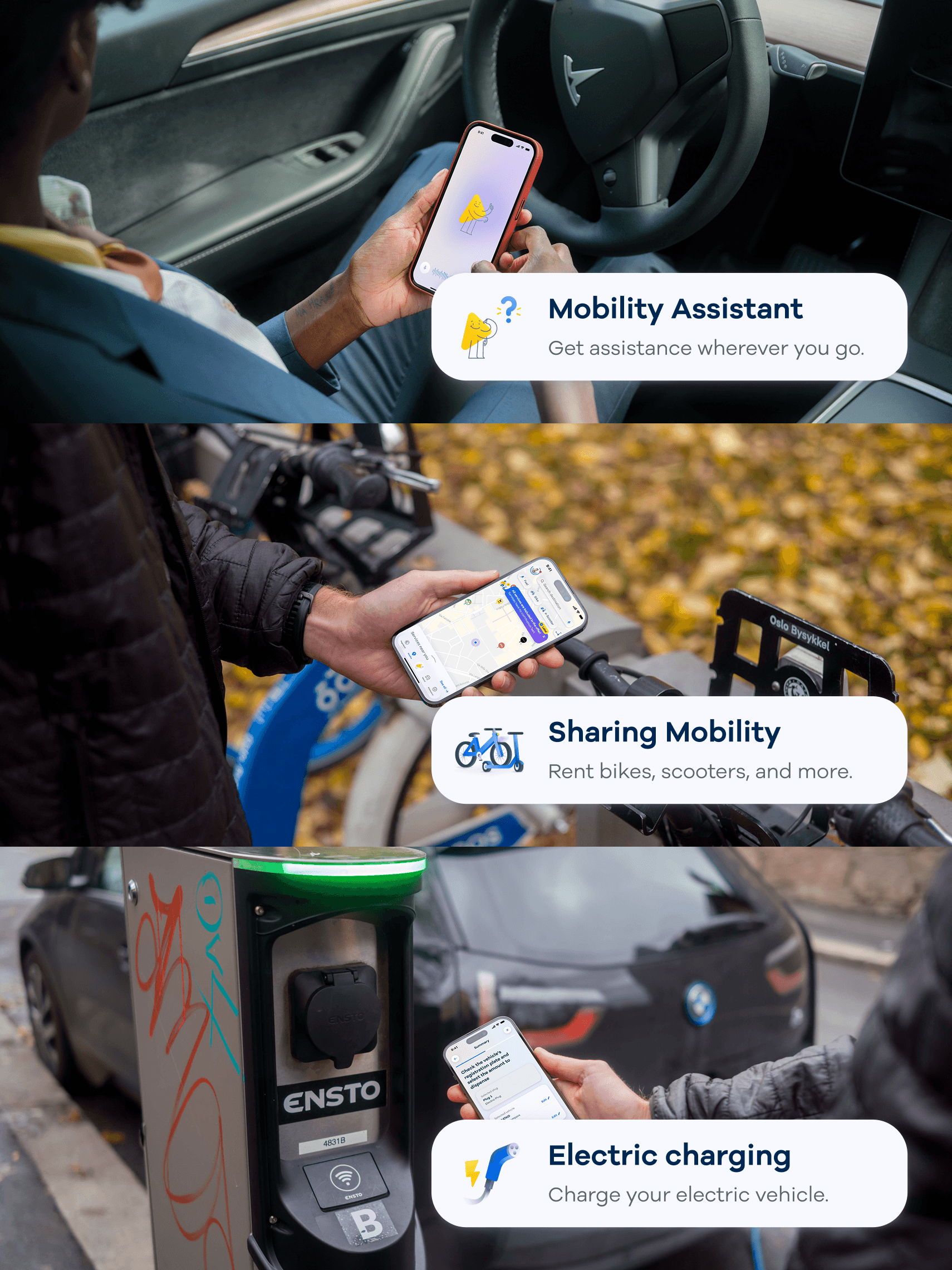
Despite a broad and growing service ecosystem (e.g. digital parking tickets, embedded sharing mobility, fuel and EV charging), users recognized the brand mainly as a single-purpose tool to manage tool payments.
Key challenges included:
very low onboarding completion (≈1%)
low monthly engagement
limited awareness and understanding of available services
a gap between brand promise and app experience
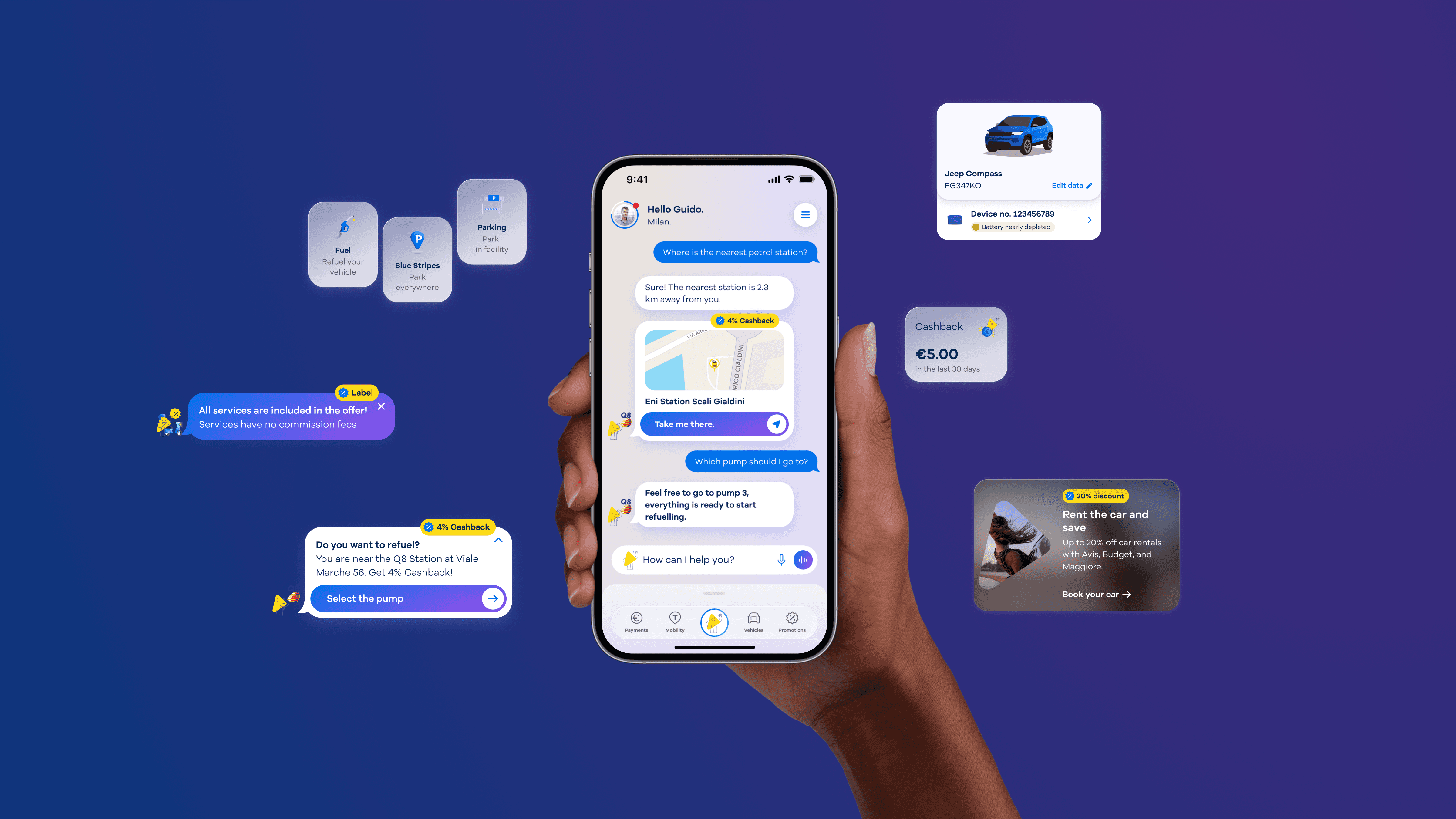
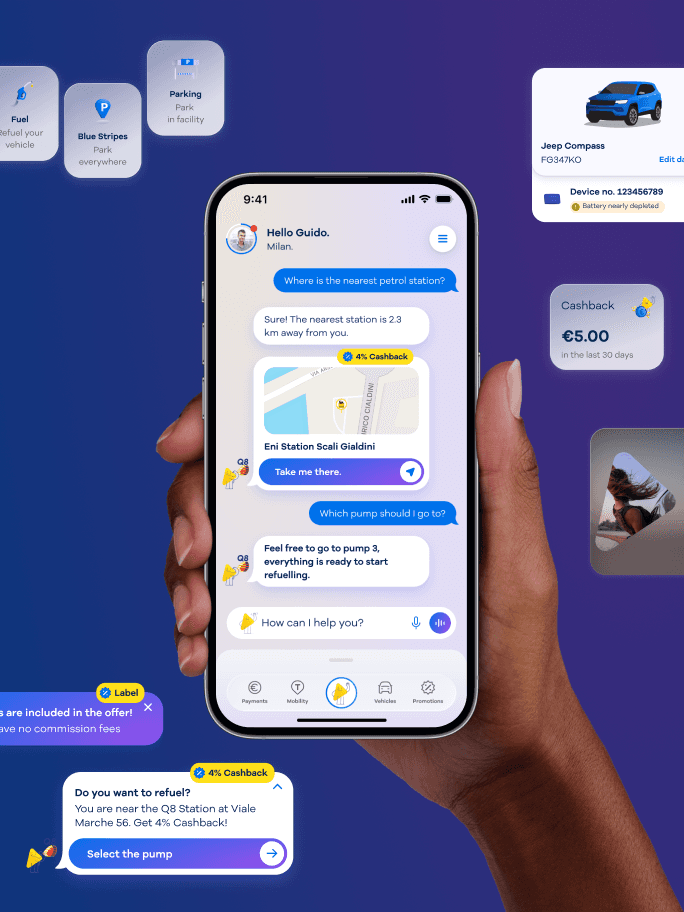
The challenge was not only to redesign the usability of the app, but redefining its role in users’ everyday mobility, shifting from a transactional tool to a relevant companion.
Goals
1 Increase app adoption and frequency of use
2 Improve awareness and usage of services beyond tolling
3 Embed intelligent, contextual assistance within experience
4 Define scalable vision to support future AI-enabled evolution
Goals
1 Increase app adoption and frequency of use
2 Improve awareness and usage of services beyond tolling
3 Embed intelligent, contextual assistance within experience
4 Define scalable vision to support future AI-enabled evolution
Constraints
1 Large and heterogeneous user base with different levels of digitalization
2 Manage multiple internal business units (mobility, fintech, loyalty, IT) sponsoring different brand strategies
3 Adaptability with existing brand language and design system
Constraints
1 Large and heterogeneous user base with different levels of digitalization
2 Manage multiple internal business units (mobility, fintech, loyalty, IT) sponsoring different brand strategies
3 Adaptability with existing brand language and design system
APPROACH
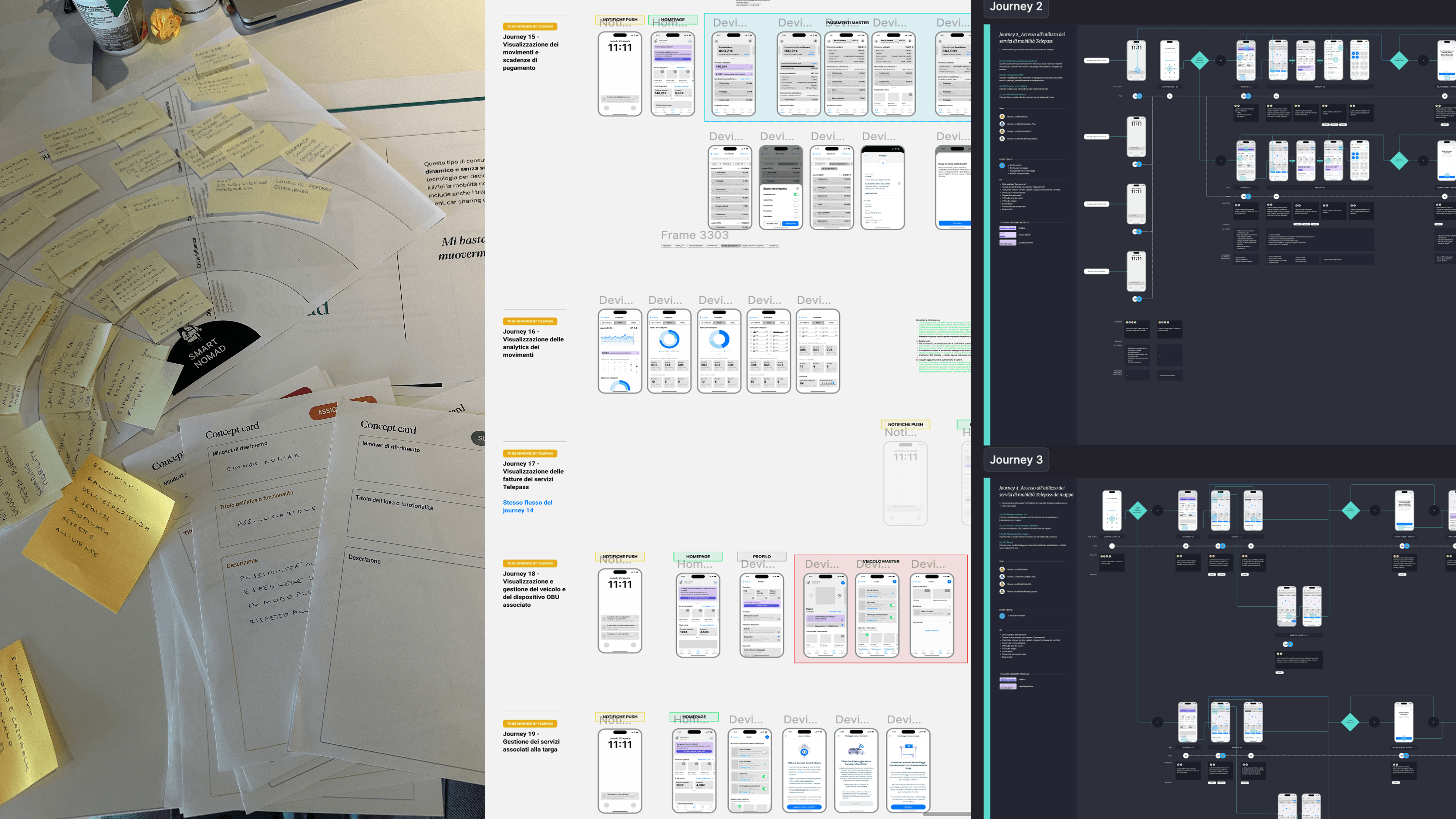
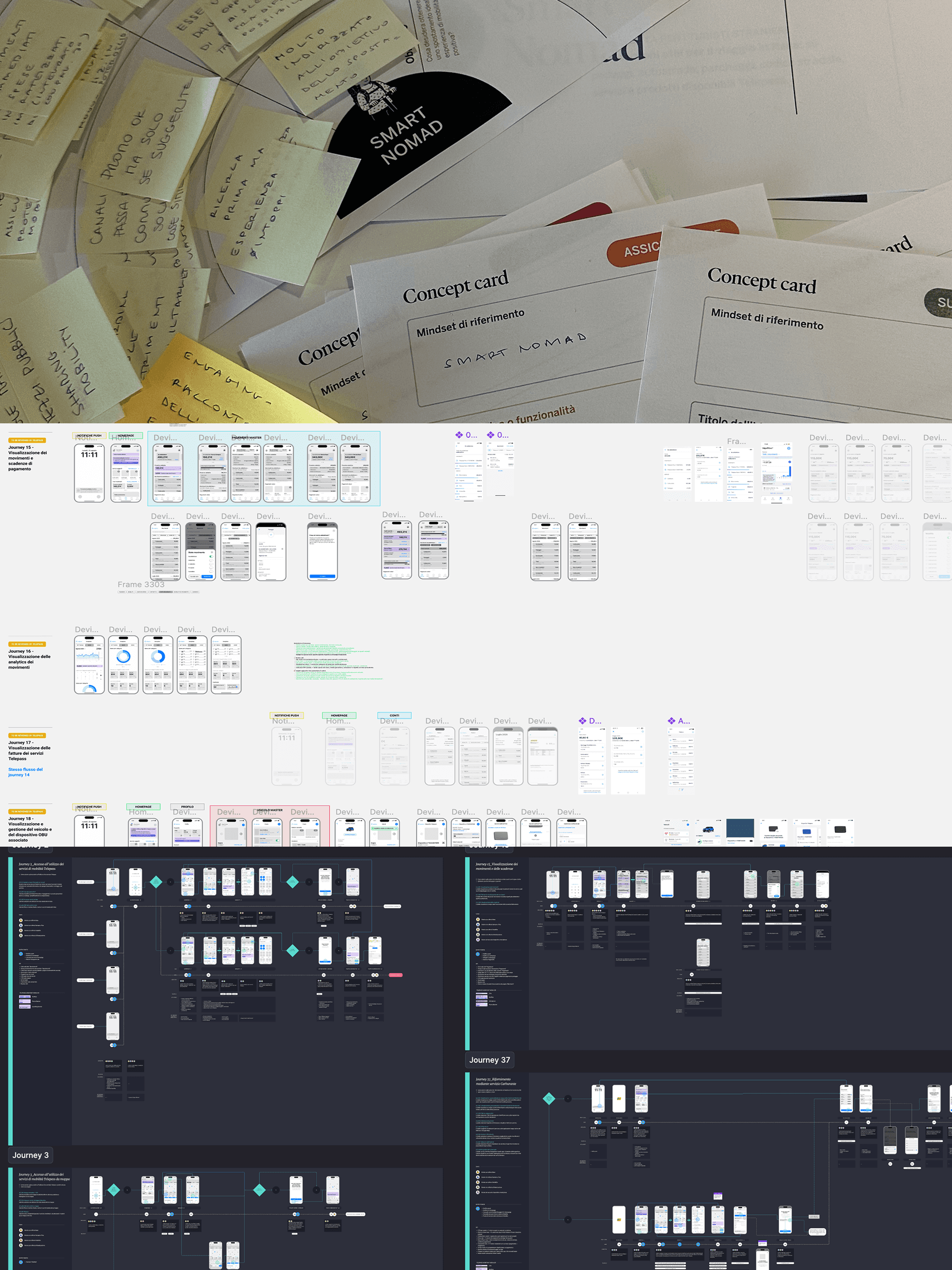
The project was grounded in direct exposure to users and operational realities.
We conducted:
on-field observations and immersion activities
qualitative research and exploratory surveys
workshops and co-creation sessions with C-level key stakeholders
This collaborative process helped align business goals with real mobility behaviors, creating shared ownership around the future experience.
Research insights were translated into:
Clear experience principles
Strategic opportunity areas
Prioritized use cases
These elements guided the definition of a new interaction model centered on contextual intelligence and progressive assistance.
KEY PILLARS
1
From transactional tool to contextual mobility companion
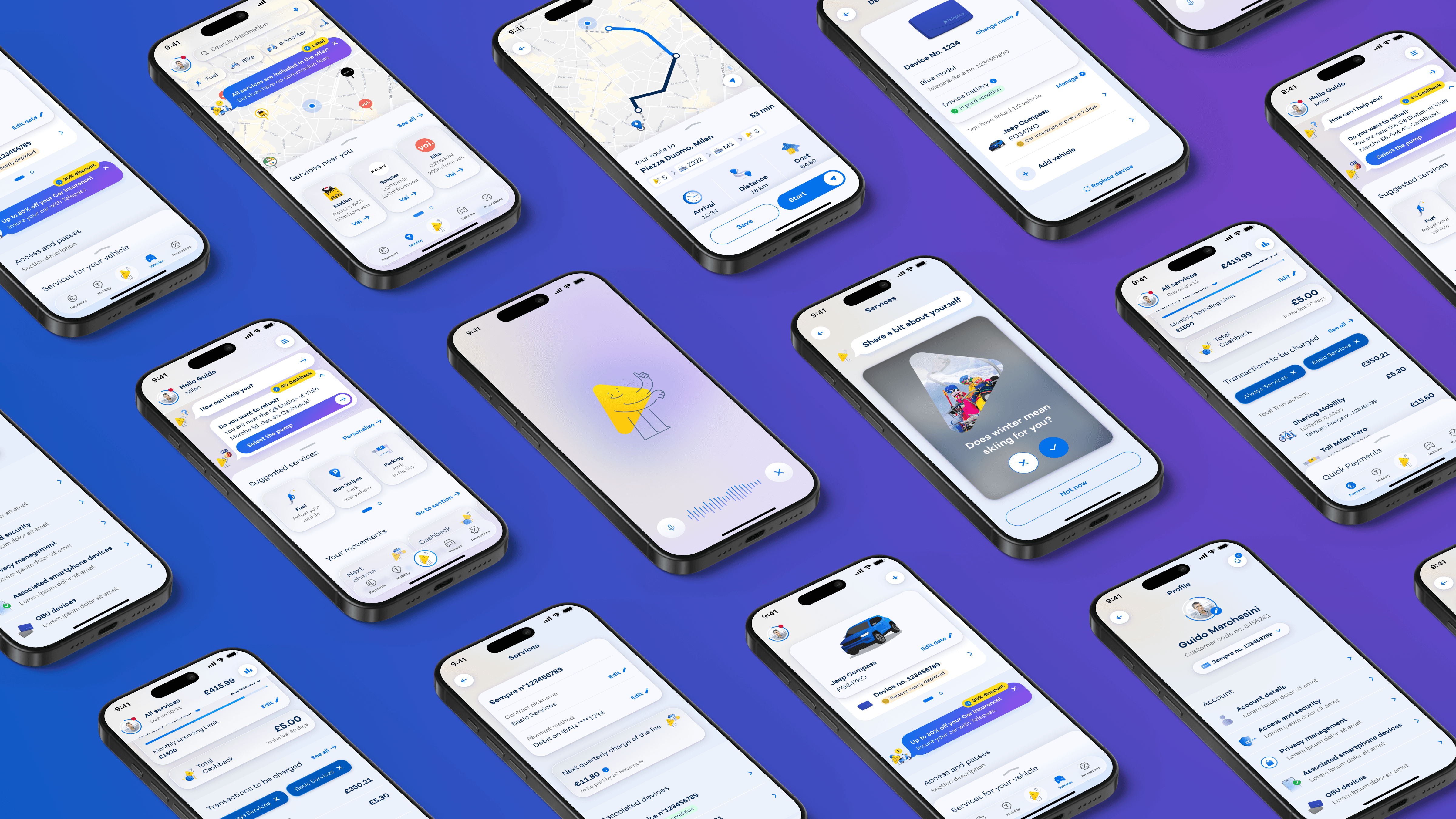
The app was reframed around mobility contexts and user moments rather than isolated services.
1
From transactional tool to contextual mobility companion
The app was reframed around mobility contexts and user moments rather than isolated services.
2
Assisted discovery instead of passive navigation
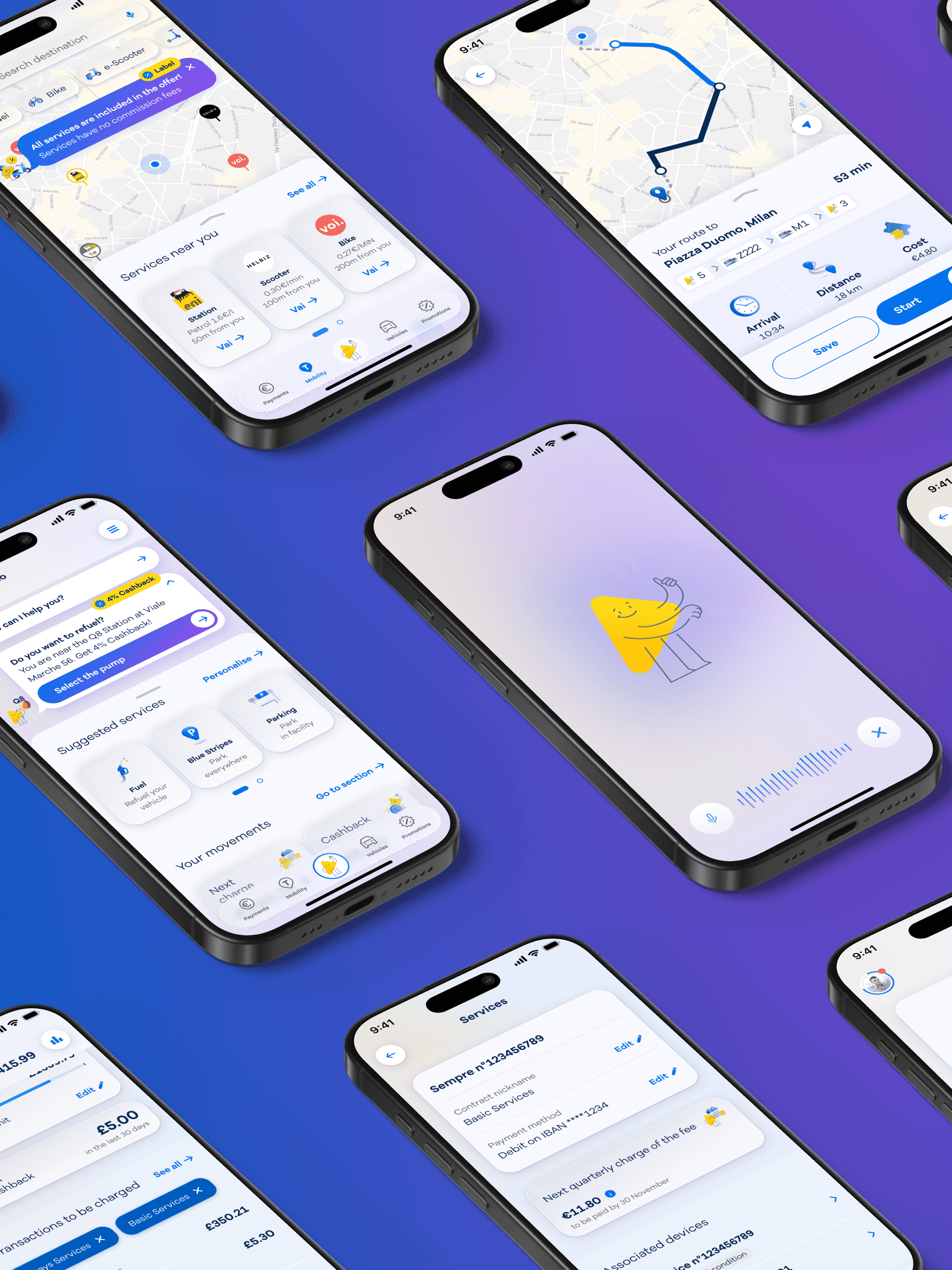
The experience introduced intelligent prompts, contextual suggestions and an assistant layer to progressively surface relevant services.
2
Assisted discovery instead of passive navigation
The experience introduced intelligent prompts, contextual suggestions and an assistant layer to progressively surface relevant services.
3
Progressive intelligence over time
The concept was structured in evolution waves, from simplified access to adaptive and AI-enabled interactions.
3
Progressive intelligence over time
The concept was structured in evolution waves, from simplified access to adaptive and AI-enabled interactions.
4
Iterative validation by design
Key concepts were tested early with users to validate desirability, clarity and perceived value before further investment.
4
Iterative validation by design
Key concepts were tested early with users to validate desirability, clarity and perceived value before further investment.
OUTCOME & IMPACT
The project delivered:
A clear experience vision for the evolution of the app
A redesigned information architecture and core flows
A new interaction model centered on contextual assistance
A validated concept tested with ~300 users
Concept testing showed significant improvements in:
Perceived usefulness and clarity
Intention to use the app more frequently
Alignment between service offering and perceived value
LEARNINGS
1
Feature ecosystems fail without contextual orchestration
Value emerges from guidance and timing, not service quantity.
2
AI is an experience problem before a technical one
Intelligence must be designed into flows before being powered by algorithms.
3
Evidence changes organizational velocity
Early validation reduces internal debate and shifts focus toward impact.

Contextual Mobility Assistant
MOBILITY
/
B2C / MaaS / AI-POWERED
CONTEXT
We collaborated with one of the most recognized mobility brands in Italy; while widely adopted for motorway toll payments, its consumer app still showed low engagement and limited perceived value beyond its core use case.
The initial shared goal of the project was to redesign the app experience to increase the adoption of additional services and strengthen long-term user engagement.
MY ROLE
I worked as a UX/UI Designer within a multidisciplinary team.
I contributed across:
on-field research and immersion
workshop facilitation with the client
UX, information architecture and concept design
CHALLENGE
Despite a broad and growing service ecosystem (e.g. digital parking tickets, embedded sharing mobility, fuel and EV charging), users recognized the brand mainly as a single-purpose tool to manage tool payments.
Key challenges included:
very low onboarding completion (≈1%)
low monthly engagement
limited awareness and understanding of available services
a gap between brand promise and app experience
The challenge was not only to redesign the usability of the app, but redefining its role in users’ everyday mobility, shifting from a transactional tool to a relevant companion.
Goals
1 Increase app adoption and frequency of use
2 Improve awareness and usage of services beyond tolling
3 Embed intelligent, contextual assistance within experience
4 Define scalable vision to support future AI-enabled evolution
Constraints
1 Large and heterogeneous user base with different levels of digitalization
2 Manage multiple internal business units (mobility, fintech, loyalty, IT) sponsoring different brand strategies
3 Adaptability with existing brand language and design system
APPROACH
The project was grounded in direct exposure to users and operational realities.
We conducted:
on-field observations and immersion activities
qualitative research and exploratory surveys
workshops and co-creation sessions with C-level key stakeholders
This collaborative process helped align business goals with real mobility behaviors, creating shared ownership around the future experience.
Research insights were translated into:
Clear experience principles
Strategic opportunity areas
Prioritized use cases
These elements guided the definition of a new interaction model centered on contextual intelligence and progressive assistance.
KEY PILLARS
1
From transactional tool to contextual mobility companion
The app was reframed around mobility contexts and user moments rather than isolated services.
2
Assisted discovery instead of passive navigation
The experience introduced intelligent prompts, contextual suggestions and an assistant layer to progressively surface relevant services.
3
Progressive intelligence over time
The concept was structured in evolution waves, from simplified access to adaptive and AI-enabled interactions.
4
Iterative validation by design
Key concepts were tested early with users to validate desirability, clarity and perceived value before further investment.
OUTCOME & IMPACT
The project delivered:
A clear experience vision for the evolution of the app
A redesigned information architecture and core flows
A new interaction model centered on contextual assistance
A validated concept tested with ~300 users
Concept testing showed significant improvements in:
Perceived usefulness and clarity
Intention to use the app more frequently
Alignment between service offering and perceived value
LEARNINGS
1
Feature ecosystems fail without contextual orchestration
Value emerges from guidance and timing, not service quantity.
2
AI is an experience problem before a technical one
Intelligence must be designed into flows before being powered by algorithms.
3
Evidence changes organizational velocity
Early validation reduces internal debate and shifts focus toward impact.