Store Ops Decision-Support System
RETAIL
/
B2B / DATA & OPERATIONS / IA
CONTEXT
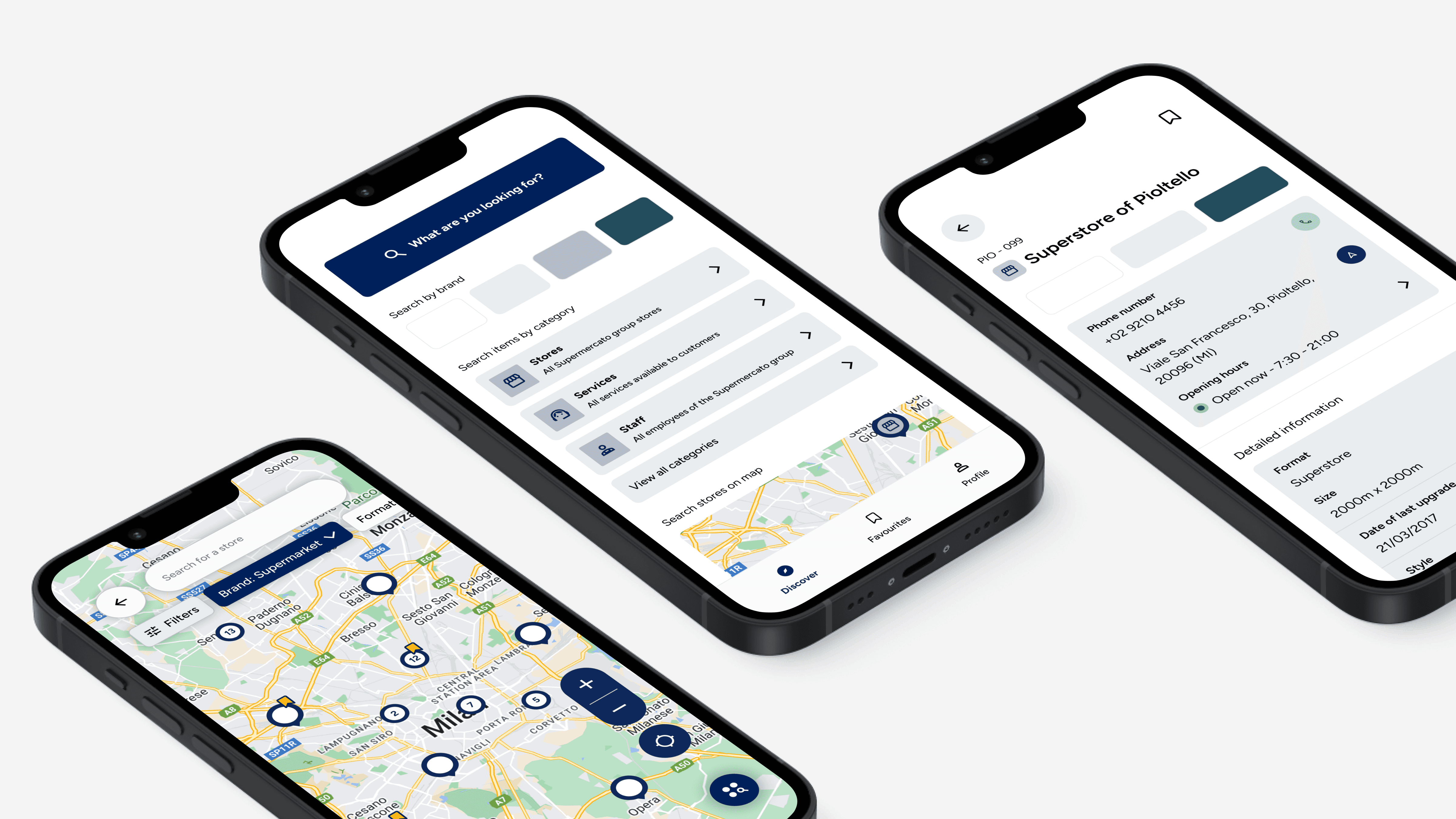
Our client needed to evolve an internal mobile application used by multiple roles to access information about physical stores, assets, services and diversified operational data.
Over time, information had become fragmented across systems, documents and informal channels, reducing efficiency and increasing the risk of errors during daily operations.
MY ROLE
I worked as a UX/UI Designer within a design team where I focused on covering user research, information architecture, interaction model and UX design.
I collaborated closely with client's business stakeholders and technical teams throughout discovery and concept definition.
CHALLENGE
Store-related information was distributed across multiple tools, often incomplete or outdated and difficult to retrieve in operational contexts and while on the move.
As a result:
users relied heavily on colleagues, phone calls or informal knowledge
cross-checking assets, layouts, or services required manual verification
different roles required different levels of detail, yet the system exposed the same information to everyone
The challenge was not a visual redesign but to redefine access logic and information structure to transform the app into a reliable, scalable single source of truth for store operations and support operational decision-making across roles.
Goals
1 Centralize store information into a reliable single source of truth
2 Introduce role-appropriate access to reduce cognitive overload
3 Enable efficient search, comparison and operational decisions
4 Support mobile-first usage in real store environments
Constraints
1 Highly heterogeneous and interdependent datasets
2 Multiple user profiles with conflicting needs
3 Legacy mental models and established workflows
4 Operational accuracy requirements preventing data abstraction or simplification
APPROACH
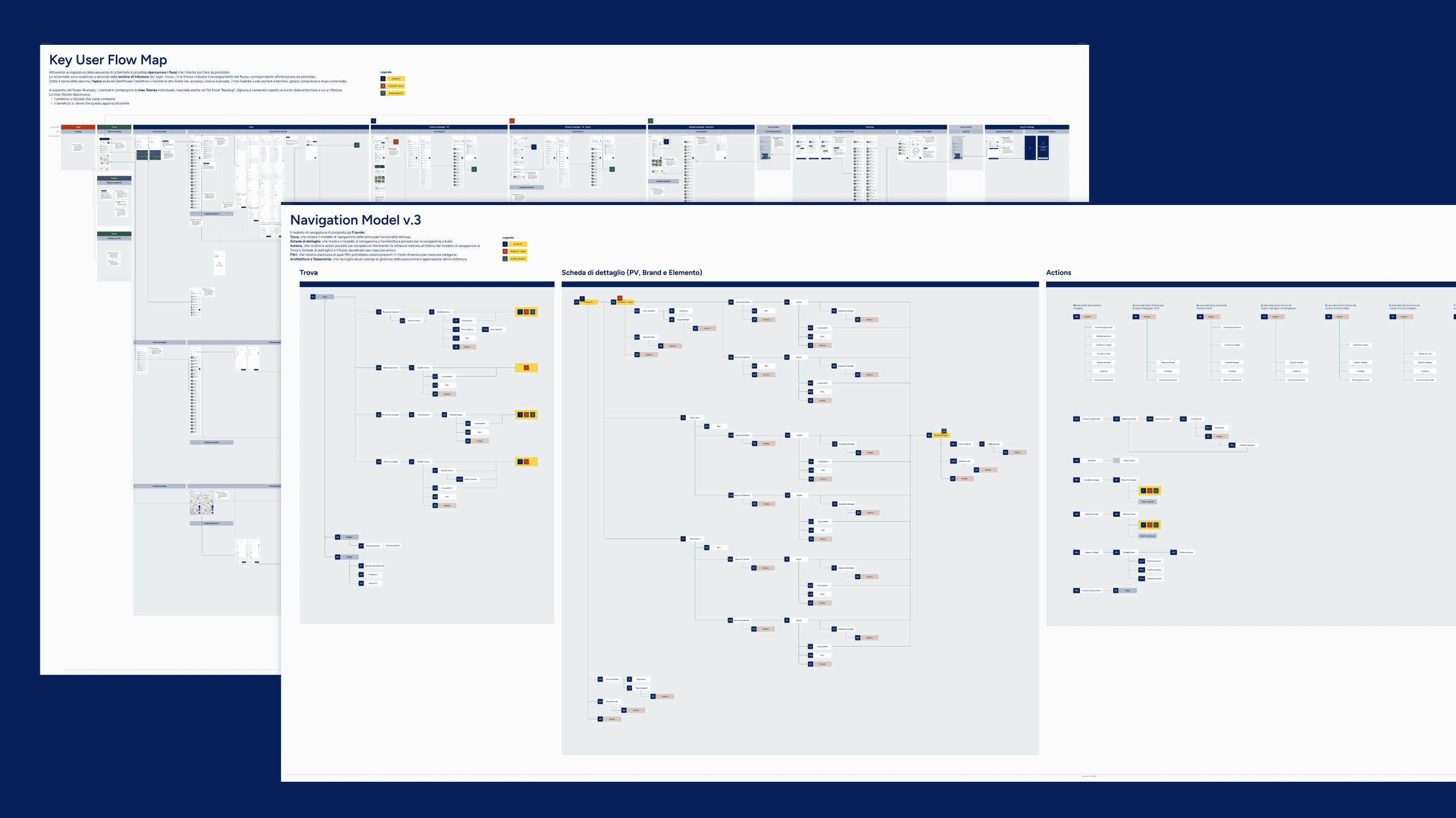
We adopted a research-driven and systemic approach, focusing on how store data was used in real operational scenarios.
The work included:
14 stakeholder interviews across roles
A cross-functional focus group with validation and card-sorting exercises
Synthesis of insights into shared structural principles
Iterative definition of navigation logic and interaction models
Rather than optimizing individual screens, the focus was on designing a coherent information architecture capable of adapting to different roles, store formats and future expansions.
KEY PILLARS
1
Store as the primary organizing unit
All information was structured around the store as the central container, creating a stable reference point across assets, services, KPIs and documentation.
2
Modular information architecture
Data was organized into flexible modules that could be activated or hidden based on store format and business needs, balancing completeness with clarity.
3
Role-based visibility layers
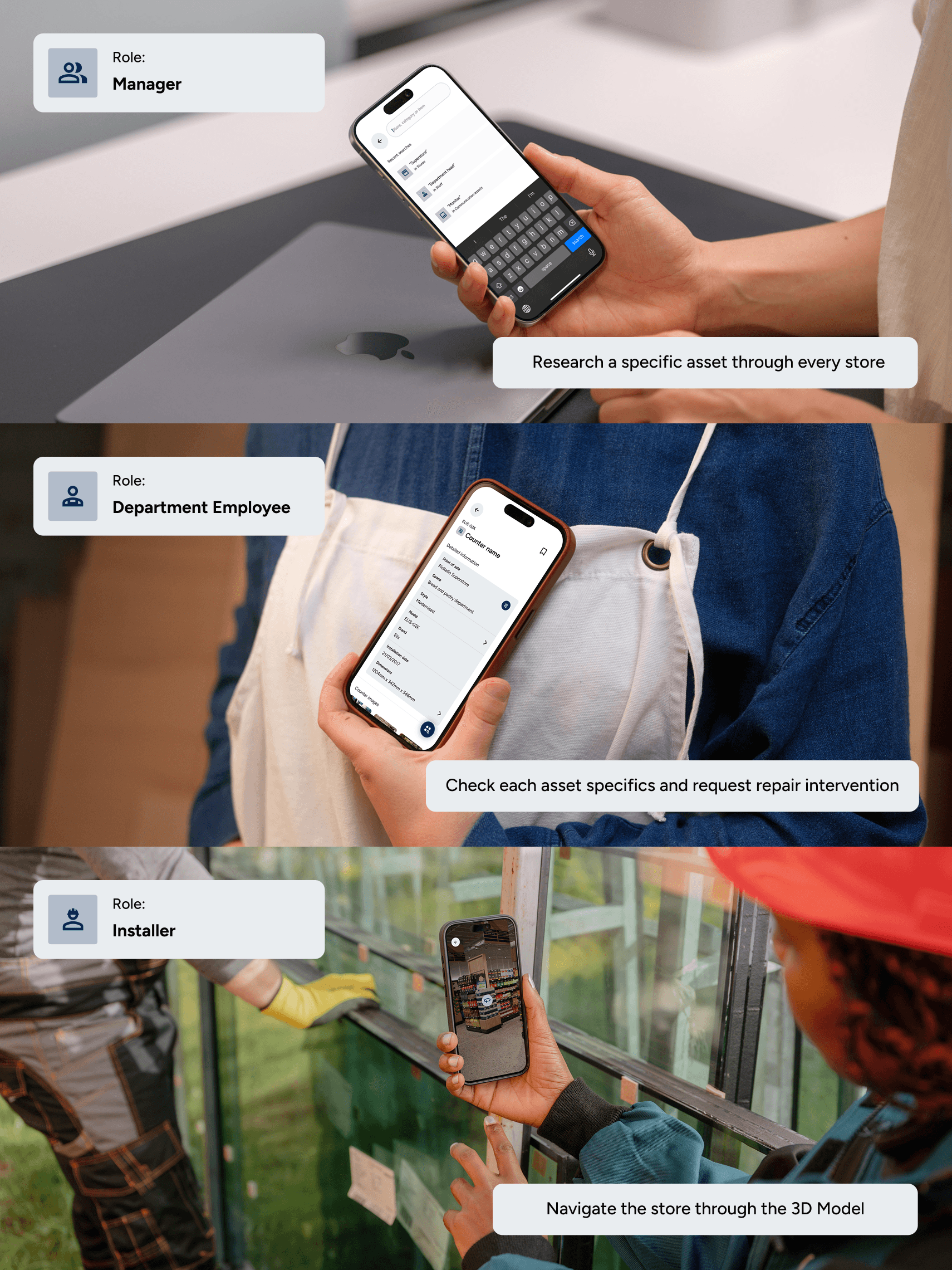
Access was structured through layered visibility logic, ensuring each profile viewed the appropriate level of detail according to responsibility and decision scope.
4
Multi-dimensional search and comparison
The system supported keyword search, categorical navigation, geospatial access, and cross-store comparison to support real operational decisions.

OUTCOME & IMPACT
The project delivered:
A clear product vision for the app
A unified and scalable taxonomy for store data
A validated interaction and navigation model
An interactive prototype supporting real operational scenarios
The new structure reduced dependency on informal knowledge exchange and laid the groundwork for a pilot implementation, enabling more efficient and reliable store-level decision-making.
LEARNINGS
1
Interface redesign cannot compensate for structural fragmentation
True efficiency required redefining access logic and information architecture, not visual refresh.
2
Access control is a cognitive tool
Role-based visibility layers reduce overload and improve accuracy by aligning information depth with responsibility.
3
Internal tools demand systemic thinking
Operational products succeed when architecture, governance, and usability are designed together.
Store Ops Decision-Support System
RETAIL
/
B2B / DATA & OPERATIONS / IA
CONTEXT
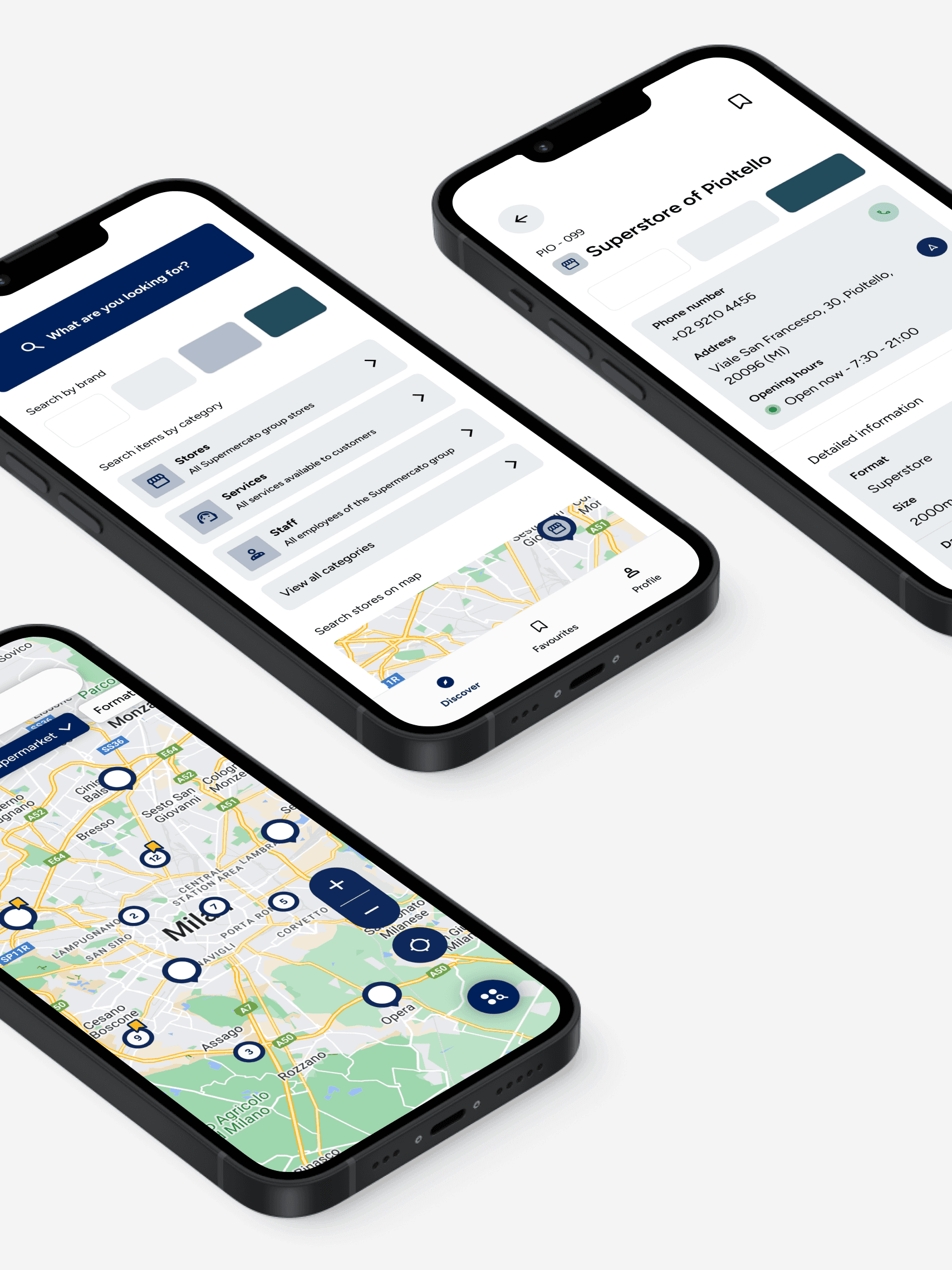
Our client needed to evolve an internal mobile application used by multiple roles to access information about physical stores, assets, services and diversified operational data.
Over time, information had become fragmented across systems, documents and informal channels, reducing efficiency and increasing the risk of errors during daily operations.
MY ROLE
I worked as a UX/UI Designer within a design team where I focused on covering user research, information architecture, interaction model and UX design.
I collaborated closely with client's business stakeholders and technical teams throughout discovery and concept definition.
CHALLENGE
Store-related information was distributed across multiple tools, often incomplete or outdated and difficult to retrieve in operational contexts and while on the move.
As a result:
users relied heavily on colleagues, phone calls or informal knowledge
cross-checking assets, layouts, or services required manual verification
different roles required different levels of detail, yet the system exposed the same information to everyone
The challenge was not a visual redesign but to redefine access logic and information structure to transform the app into a reliable, scalable single source of truth for store operations and support operational decision-making across roles.
Goals
1 Centralize store information into a reliable single source of truth
2 Introduce role-appropriate access to reduce cognitive overload
3 Enable efficient search, comparison and operational decisions
4 Support mobile-first usage in real store environments
Constraints
1 Highly heterogeneous and interdependent datasets
2 Multiple user profiles with conflicting needs
3 Legacy mental models and established workflows
4 Operational accuracy requirements preventing data abstraction or simplification
APPROACH
We adopted a research-driven and systemic approach, focusing on how store data was used in real operational scenarios.
The work included:
14 stakeholder interviews across roles
A cross-functional focus group with validation and card-sorting exercises
Synthesis of insights into shared structural principles
Iterative definition of navigation logic and interaction models
Rather than optimizing individual screens, the focus was on designing a coherent information architecture capable of adapting to different roles, store formats and future expansions.
KEY PILLARS
1
Store as the primary organizing unit
All information was structured around the store as the central container, creating a stable reference point across assets, services, KPIs and documentation.
2
Modular information architecture
Data was organized into flexible modules that could be activated or hidden based on store format and business needs, balancing completeness with clarity.
3
Role-based visibility layers
Access was structured through layered visibility logic, ensuring each profile viewed the appropriate level of detail according to responsibility and decision scope.
4
Multi-dimensional search and comparison
The system supported keyword search, categorical navigation, geospatial access, and cross-store comparison to support real operational decisions.
OUTCOME & IMPACT
The project delivered:
A clear product vision for the app
A unified and scalable taxonomy for store data
A validated interaction and navigation model
An interactive prototype supporting real operational scenarios
The new structure reduced dependency on informal knowledge exchange and laid the groundwork for a pilot implementation, enabling more efficient and reliable store-level decision-making.
LEARNINGS
1
Interface redesign cannot compensate for structural fragmentation
True efficiency required redefining access logic and information architecture, not visual refresh.
2
Access control is a cognitive tool
Role-based visibility layers reduce overload and improve accuracy by aligning information depth with responsibility.
3
Internal tools demand systemic thinking
Operational products succeed when architecture, governance, and usability are designed together.
Store Ops Decision-Support System
RETAIL
/
B2B / DATA & OPERATIONS / IA
CONTEXT
Our client needed to evolve an internal mobile application used by multiple roles to access information about physical stores, assets, services and diversified operational data.
Over time, information had become fragmented across systems, documents and informal channels, reducing efficiency and increasing the risk of errors during daily operations.
MY ROLE
I worked as a UX/UI Designer within a design team where I focused on covering user research, information architecture, interaction model and UX design.
I collaborated closely with client's business stakeholders and technical teams throughout discovery and concept definition.
CHALLENGE
Store-related information was distributed across multiple tools, often incomplete or outdated and difficult to retrieve in operational contexts and while on the move.
As a result:
users relied heavily on colleagues, phone calls or informal knowledge
cross-checking assets, layouts, or services required manual verification
different roles required different levels of detail, yet the system exposed the same information to everyone
The challenge was not a visual redesign but to redefine access logic and information structure to transform the app into a reliable, scalable single source of truth for store operations and support operational decision-making across roles.
Goals
1 Centralize store information into a reliable single source of truth
2 Introduce role-appropriate access to reduce cognitive overload
3 Enable efficient search, comparison and operational decisions
4 Support mobile-first usage in real store environments
Constraints
1 Highly heterogeneous and interdependent datasets
2 Multiple user profiles with conflicting needs
3 Legacy mental models and established workflows
4 Operational accuracy requirements preventing data abstraction or simplification
APPROACH
We adopted a research-driven and systemic approach, focusing on how store data was used in real operational scenarios.
The work included:
14 stakeholder interviews across roles
A cross-functional focus group with validation and card-sorting exercises
Synthesis of insights into shared structural principles
Iterative definition of navigation logic and interaction models
Rather than optimizing individual screens, the focus was on designing a coherent information architecture capable of adapting to different roles, store formats and future expansions.
KEY PILLARS
1
Store as the primary organizing unit
All information was structured around the store as the central container, creating a stable reference point across assets, services, KPIs and documentation.
2
Modular information architecture
Data was organized into flexible modules that could be activated or hidden based on store format and business needs, balancing completeness with clarity.
3
Role-based visibility layers
Access was structured through layered visibility logic, ensuring each profile viewed the appropriate level of detail according to responsibility and decision scope.
4
Multi-dimensional search and comparison
The system supported keyword search, categorical navigation, geospatial access, and cross-store comparison to support real operational decisions.
OUTCOME & IMPACT
The project delivered:
A clear product vision for the app
A unified and scalable taxonomy for store data
A validated interaction and navigation model
An interactive prototype supporting real operational scenarios
The new structure reduced dependency on informal knowledge exchange and laid the groundwork for a pilot implementation, enabling more efficient and reliable store-level decision-making.
LEARNINGS
1
Interface redesign cannot compensate for structural fragmentation
True efficiency required redefining access logic and information architecture, not visual refresh.
2
Access control is a cognitive tool
Role-based visibility layers reduce overload and improve accuracy by aligning information depth with responsibility.
3
Internal tools demand systemic thinking
Operational products succeed when architecture, governance, and usability are designed together.